Frost heave around here has a mean sense of humor. It waits until the driveway is finally paid off, then splits the slab like a Del's cup dropped on Federal Hill. Concrete repair in Providence is mostly that same fight every March: water sneaks into a hairline, freezes, and shoves.
So here's how our concrete contractors company handles it. You get a call back the same day, not a week Thursday. We arrive when we said we would, we don't lean on anybody to sign anything, we don't talk down to you about your own cracked concrete, and the driveway gets swept before the truck leaves.
Below is how we fix steps, slabs, sidewalks and basement floors, what moves the price, and the things folks want cleared up first. Give me a ring at (401) 394-6425 and I'll come look at it.
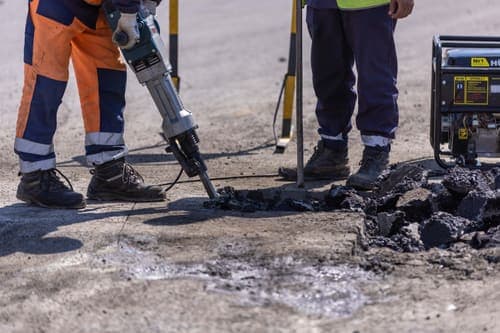
Cement Crack Repair
Cement crack repair starts with a diamond crack chaser blade, not a caulk gun. We saw the crack out to roughly a quarter inch wide and a half inch deep, vacuum the dust, then fill it. Which filler depends on what the crack is doing.
A dead-still hairline in a garage floor takes an epoxy concrete repair that welds the two edges back into one slab, while a walk that still shifts with the seasons gets a flexible polyurethane so February doesn't tear it right back open.
Skip the routing and the sealant sits on the surface like frosting. First plow blade down your street peels it off in strips.
Most cracked concrete on a single-car apron is a morning's work. Our concrete contractors company won't patch a crack that's still moving, though. That's settlement, and it needs the cause fixed first.
Concrete Crack Repair
Concrete crack repair goes wrong when somebody smears filler over the top and calls it done, so the first thing we do is figure out whether your crack is still moving. A hairline that settled years ago and a joint that opens every January are two different jobs. We chase the crack out with a diamond blade to about a quarter inch wide and just as deep, vacuum the dust, then fill.
Epoxy concrete repair welds the two faces back into one piece, which is right for cracked concrete that has stopped shifting. Polyurethane stays flexible for the ones that breathe with the frost. Our concrete contractors company carries both on the truck, because guessing wrong means doing it again next spring. Most slabs are routed, filled and back in service the same afternoon.
Concrete Patching
Concrete patching is the spot fix: a chunk out of a landing, a divot where a plow blade caught the walk, a low corner on a garage slab that collects water every time it rains. Feathering new mix over the old edge is what fails. Thin edges break off by the second winter, and now you have a bigger hole than you started with.
We saw cut the perimeter square, go down at least an inch, clean the dust out, wet the substrate, then bond the patch with a polymer-modified mortar or an epoxy concrete repair mix where the load calls for it. Most patches take an afternoon and light foot traffic the next day.
For a bad sidewalk panel on Hope Street, our concrete contractors company will tell you straight when concrete sidewalk repair beats patching and the panel should just come out.
Concrete Driveway Repair
Concrete driveway repair usually comes down to three things: a panel that has dropped at the apron, cracks that opened up wider than a pencil, and edges crumbling where the plow blade caught them. First thing I do is work out whether the slab actually moved or just cracked, because patching the surface of a slab that's settling does nothing. What I refuse to do is float material over a crack with hollow concrete beneath it.
That lets go inside a season and takes a fist-sized chunk with it. Proper concrete driveway crack repair means opening the crack out, blowing the dust clear, and filling it with something that can still move. Size, depth, truck access and how long it sat before you called are what move the price. Most driveways are done in a day.
Seal Cracks In Concrete
When we seal cracks in concrete, we're not running a bead of hardware store caulk down the gap and calling it done. We chase the crack open with a crack chaser blade so there's a clean channel to bond to, vacuum the dust out, drop in backer rod anywhere it runs deep, then fill with a self-leveling polyurethane that stays flexible when February hits single digits and the slab shrinks away from itself.
Hairline, non-moving stuff in a slab is different. That's where epoxy concrete repair earns its keep, because epoxy is rigid and knits both sides back together rather than cushioning them.
Pick wrong and the sealant tears loose by the second thaw, and now you've got water under the slab again.
Most walks and drives our concrete contractors company seals take a morning, walkable that afternoon, drivable the next day.
Spalling Concrete
Spalling concrete is that flaking, pockmarked surface where water soaks into the top layer, freezes, and pops chips off the size of a quarter. Road salt does most of the damage here. The city salts hard all winter, you track it up the walk, and by the third March your slab is shedding.
Depth decides the fix. If it's a quarter inch of scaling, we chip back to sound concrete, brush on a bonding slurry, and float a polymer-modified overlay across it. If the rebar underneath has rusted and swelled, patching the top is lipstick on a pig, and that section gets rebuilt instead.
Steps spall first because they get salted twice as often. Before quoting concrete step repair, our concrete contractors company sounds out the risers and nosings; a broken nose usually comes back with an epoxy concrete repair and a form.
Fill Cracks In Driveway
When I fill cracks in driveway slabs, the first thing I do is cut the crack wider, not narrower. Sounds backwards, I know. A hairline has nothing for the filler to grab, so we chase it open with a crack saw, blow and vacuum out every bit of dust, drop backer rod in where it runs deep, and fill with a self-leveling polyurethane that can stretch a little when the slab shifts.
Skip the vacuuming and that fill peels out in ribbons by August, taking chips of cracked concrete with it.
What moves the price on this kind of concrete repair is total footage, how deep the cracks in driveway surfaces actually go, whether the edges have already crumbled into gravel, and how close I can park the truck to the work. Most drives take most of a morning, and you're back on it the same day.
Recover Concrete Driveway
We can recover a concrete driveway you've already half decided to tear out. If the slab is still sitting flat and only the top inch or so has gone to pieces, an overlay saves you the demolition and the dumpster.
We shot blast or grind the old surface open so the new material has something to bite into, chase out and fill the working cracks first, then screed on a polymer modified overlay around three eighths of an inch thick and finish it broom or stamped.
Skip the profiling and that overlay lifts off in sheets by the first hard winter. Skip the crack work and every one of those cracks in the driveway telegraphs straight back through by spring.
Two days on a typical two car drive, cars on it in about three. Square footage, access, how much has spalled and the time of year move what it comes to.
Stamped Concrete Sealing
Stamped concrete sealing is what keeps that ashlar or flagstone pattern from fading to a chalky gray on you. The color hardener and release powder live right at the surface, so once the sealer gives out, sun and plow salt start pulling that color straight off and the high spots begin flaking.
We pressure wash first, strip any old sealer that's peeling, let the slab dry a full day or two, then put down two thin coats of acrylic instead of one heavy one. A thick coat traps moisture underneath and blushes milky white, and the only cure for that is stripping it back and starting over. Any concrete patching and crack filling gets done before the sealer, never after.
Size of the patio, how much dead sealer has to come off, and whether you want non-slip grit are what move the price.
Concrete Step Repair
Concrete step repair is the job we get called for most once the snow finally quits, because road salt and a Providence winter go after the front stoop harder than anything else on the property. The nose of a tread crumbles first, then the riser behind it, and suddenly you're stepping over a hole to get your groceries in the door.
We chip back to sound material, drill and pin the new section with stainless dowels, and rebuild the tread with a polymer-modified mortar that bonds instead of just sitting there like frosting. If the whole stoop has tipped toward the sidewalk, that's washed-out fill underneath, not cracked concrete, and it gets lifted before anything else. Keep the treads level and the rise consistent, roughly seven and a half inches, or the repair trips people.
Give it three days before heavy traffic.
Crack Filling
Crack filling is the cheap job that stops the expensive one, and on driveways, walks and garage slabs that are otherwise sound it's most of what we're called out for.
We chase the crack open with a blade or a crack chaser first so there's a clean channel with real walls, vacuum the dust out, drop in backer rod where it runs deep, then gun in a self leveling polyurethane that flexes when the slab moves and takes a sand broadcast on top so it doesn't shine.
Tube caulk smeared over the surface looks tidy for one spring and peels up in ribbons by fall, and then water's running under your slab again.
Length, depth, how much grit and moss packed in, and whether we can get the truck near the work all move what concrete driveway crack repair costs. Most jobs are a morning.
Epoxy Concrete Repair
Epoxy concrete repair is what I use when a crack has to be welded shut instead of covered over. We drill ports along the line, seal the face with paste so it will hold pressure, then inject resin slowly from the lowest port until it shows at the next one up. Once it cures, that bond runs stronger than the slab it went into.
The failure here is injecting into wet concrete. If a crack in basement floor slabs is still seeping, the resin will not grip and the repair lets go inside the year, so we switch to a flexible polyurethane that cures against water. Epoxy mortar also does real work rebuilding a spalling concrete edge on a loading pad, where a soft patch mix crumbles under the first pallet jack.
Price on this kind of concrete repair follows crack length, port count, the thickness of the wall or slab, and whether old coatings have to be ground off before anything will bond.
What the job involves
Most concrete repair starts with a hammer, not a trowel. I tap around the damage until the dull spots tell me how far the loose stuff runs, then cut the edges square so the patch has something to grip instead of a feathered lip that pops off the first time somebody drags a snow shovel over it. A crack in basement floor gets handled differently.
I want to know whether it is still moving and whether water is showing up through it before anything goes in, because filling a live crack just relocates the problem a few inches sideways.
Size, depth and access are what move the number. Hauling bags down the back stairs of a Fox Point triple decker is a longer day than backing the truck up to an open garage slab. Condition counts too, since one small repair ignored for two winters usually turns into three.
What it costs
Cost on a concrete repair job swings more than people expect, and most of it I can read off your slab in about ten minutes. Size and access come first: a back patio behind a narrow gate means hand tools and more hours than an open driveway. Then depth. Tight cracks in driveway slabs get routed and sealed. A slab rocking on washed out base is a different job, and pretending otherwise is how you end up doing it twice.
Spalling concrete depends on how far the surface has flaked and whether there's rebar rusting underneath. Time of year counts too, since patching material won't cure properly in the cold.
Call me at (401) 394-6425, tell me what you're looking at, and you'll get a real number instead of a guess.
When concrete repair is the wrong fix
Sometimes concrete repair is the wrong call, and it costs me a job to say so. If your concrete driveway has broken into more than a handful of pieces and the slabs rock underfoot, the ground beneath has shifted, and patching a slab like that just brings the same cracks back by the following winter. That one gets torn out and poured new.
A concrete retaining wall that's leaning or bellied at the middle is a rebuild too, not something a bag of patch material fixes. Water pushing through a concrete foundation wall means the drainage outside needs sorting first, or you'll be sealing the same crack twice. And a dull stamped concrete patio isn't damaged, it's thirsty: decorative concrete finishes come back with stamped concrete sealing, which is a completely different job from concrete patching.
Why choose us for this
You have a slab with a crack running through it, you have been stepping over it all summer, and what you want from a concrete repair is to hire somebody once and stop thinking about it. Fair enough.
Plenty of concrete contractors will price this off a photo you text over. We come and look at the edges, because that is what decides the method. A lower number on a patch usually means nobody is cutting the crack back to solid material before anything goes in it, and what I refuse to do is trowel filler over a crumbling lip. That lets go within a season and takes a piece of the slab with it.
Crack filling on a slab that has settled works the same way: the repair has to follow the movement.
The mess here is dust and saw slurry, so the siding and the plantings get covered before the grinder runs.
Frequently asked questions
What is the difference between concrete repair and just replacing the slab?
Concrete repair makes sense while the concrete around the damage is still solid and the base under it hasn't washed away. Once a slab has cracked into pieces that rock when you step on them, patching is money thrown away and I would rather pour you a new one.
Do you handle basement repair as well as outside work?
Yes, and basement repair is a good share of what we do. Poured wall cracks get injected from the inside, and I patch out spots on eight-inch walls where the snap ties have rusted through. I look at your downspouts too, because most damp floors start with water landing next to the wall.
How do we get started?
I come out, measure the crack width, tap along the edges listening for hollow concrete, and tell you whether it's a patch or a tear-out. We're licensed, bonded and insured, with the certificate available on request.
Contact The Providence Concrete Company now
Call the Providence concrete company that'll actually come stand on the problem with you: (401) 394-6425. Tell me what you're looking at, a sunken walk in Elmhurst, a concrete repair where somebody's earlier patch has let go, water tracking in down cellar, and I'll come out and put eyes on it before I say a word about method. Basement repair I treat differently from exterior slabs, because I want to know where the water starts before anyone mixes a thing.
What moves the number on concrete repair is square footage, how deep the damage runs, whether a truck can get within hose reach, and how long it's been sitting. Left long enough, a patch turns into a replacement. Somebody's here weekdays during working hours, and a message left gets called back.