The wall behind your yard is bowing out and the top course has stepped away from the corner.
A concrete retaining wall is the only thing keeping half the back yards in this city out of somebody's driveway, and gravity doesn't take days off.
We build them all over Providence, Olneyville out to Wickenden Street: concrete block retaining wall work, poured concrete walls, driveway retaining wall rebuilds where the old one leans toward the street. Most walls we tear out didn't fail on the block. They failed because no one put a foot of clean three quarter inch stone and a perforated pipe behind them. Retaining wall drainage is where our hours go, and it's the part you'll never see.
Keep going for how we build one, what moves the price, the block and stone options, and the questions that come up first. Or call me at (401) 394-6425 and I will come walk the slope with you.
Block Retaining Wall
A block retaining wall lives or dies below the dirt, which is where most of our day goes. We cut the trench, lay six inches of crushed stone, tamp it in shallow lifts, and bury the bottom course so runoff can't walk it out from underneath. Behind the face goes clean drainage stone and a perforated pipe with a real place to let go.
A concrete retaining wall that bellies out in the middle almost always had backfill shoveled straight against the block and no stone at all. You're asking it to retain a wall of soaked soil after a nor'easter, not just look tidy from the street.
What moves the price on a concrete block retaining wall is height, length, how deep we dig, and whether a machine can get around back or the stone comes down a driveway by the barrow load. Providence Concrete Company walks the grade before quoting for exactly that reason.
Interlocking Retaining Wall Blocks
Interlocking retaining wall blocks are what I set in most back yards around here: dry-stacked units with a cast lip or pin that locks each course into the one below. No mortar joints to crack the way a cinder block retaining wall does, and no footing to pour.
We trench out, lay crushed stone, screed a leveling pad, then spend half the first morning getting that bottom course dead level, because every course above copies whatever you got wrong down low. Drainage rock goes behind the face and fill goes in shallow lifts as we climb.
Skip the rock and the first long wet stretch pushes the third course out into your lawn.
A block system will retain a wall of soil beside a driveway as well as a poured concrete retaining wall does. Height, machine access and how much dirt leaves the property matter to the price far more than the block style.
Cmu Block Wall
A cmu block wall is the one I reach for when you want a straight, square face and a wall that will hold real weight, and it lives or dies on what you can't see. The footing goes below the frost line, vertical rebar ties into it, and the cores get grouted solid. Hollow cores and a mortar joint are just a stack of blocks waiting to lean.
Behind it, perforated pipe in washed stone with fabric over the top, plus weeps through the face. Skip that retaining wall drainage and the soil pushes water into the block until you get a bowed face and white bloom on the mortar.
Figure most of a week on a backyard run, longer if the block has to be carried by hand through a narrow yard because no truck is getting back there.
Gabion Wall
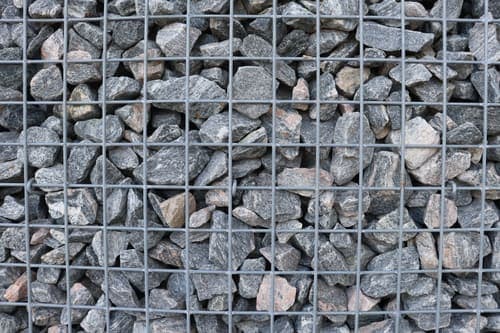
A gabion wall is a stack of galvanized steel mesh baskets packed with stone, and it earns its keep where a poured concrete wall would fight the water instead of letting it through. Drainage is free, since the whole face breathes.
We use PVC-coated mesh anywhere near salt air off the bay, because bare zinc gives up early around here, and we hand-pack the visible faces with 4 to 8 inch angular stone rather than dumping rounded river rock that rolls loose by the second winter. Internal bracing wires stop the bellying you see on baskets somebody filled in a hurry.
A 30 foot run at three feet tall usually takes us two or three days. Stone choice, wall height, mesh coating and how close a truck can get all move the number, and Providence Concrete Company can also tie gabions into low planter walls along the same grade.
Cement Retaining Wall
When somebody calls asking about a cement retaining wall, they usually mean one of two things: a solid face holding back a slope, or a low garden wall keeping the mulch out of the driveway. Either way, a concrete retaining wall lives or dies behind the face, not on it.
We pour a footing below the frost line, backfill with three quarter inch crushed stone instead of the clay that came out of the hole, tamp it in lifts, and leave weep outlets so water has a way out besides shoving on your wall. Planter walls get the same drainage treatment, because a box of soaked loam weighs more than people expect. Want the look of a retaining wall paver face over a poured core? That works fine.
Length and height move the number, and so does access, since wheelbarrowing stone through a narrow gate behind a triple decker eats a morning.
Rockery Wall
A rockery wall is what I build when you want a bank held with boulders instead of a poured concrete retaining wall, and on plenty of Providence lots it's the smarter choice. Each stone gets set on a bed of crushed rock, faced back into the slope, and stacked so the course above locks down the one under it. Behind the rock goes filter fabric and drain stone.
A rockery stacked on bare dirt with nowhere for water to go will belly out after one wet stretch, and at that point it's a rebuild, not a fix. Boulder size, how far we cut the bank back, and whether a machine can reach the work without going through your lawn are what move the price. Where the wall meets a patio, we'll tie in planter walls or a retaining wall paver cap.
Stem Walls
Stem walls are the short poured concrete walls that carry a house, a garage slab or a front porch, sitting on a spread footing below the frost line and holding back the dirt behind them while they're at it. We dig the footing deep, tie vertical rebar into it every couple of feet, then form and pour the stem in one go, so there's no cold joint halfway up the wall waiting to weep.
Where a stem doubles as a driveway retaining wall, we thicken the section and put drain rock behind it with a perforated pipe running out to daylight, because water pressure splits these far more often than weight ever does. Done on the cheap, you get a hairline crack that opens a little wider every winter and a damp garage floor by April. Forms come off in a day or two; backfill waits.
Stone Wall Retaining Wall
A stone wall retaining wall around here is usually two things at once: a poured concrete retaining wall doing the holding, and fieldstone or split granite on the face doing the looking. Anything over a couple of feet holding back a bank needs that cement retaining wall behind it. We tie rebar through the core, carry the footing down below frost depth, pack washed crushed rock against the back and give the water a way out the low end.
Then the stone gets set by hand in mortar, course by course, and that is the slow half of the job.
Skip the drainage and the handsomest wall on the street bulges and starts dropping stones by the second wet spring. Height, length, dig depth, whether a machine can get to the back yard, and your stone choice are what move the price.
Geogrid Retaining Wall
A geogrid retaining wall is what a tall wall needs, because once the hill behind it outweighs the block, the blocks stop being the structure and the soil becomes the structure. We roll sheets of grid out between courses as we build, pinned under the weight of the interlocking retaining wall blocks above, and run them back into the slope over drainage stone we tamp in lifts of six or eight inches at a time.
How far the grid reaches comes off the design for your ground, not a rule of thumb.
Cut that grid short to save a roll and the wall looks flawless for a year. Then the upper courses start walking out, the caps step apart, and you rebuild a concrete retaining wall you already bought once.
Height, dig-back room, machine access and where the spoil goes are what move the price.
Brick Retaining Wall
A brick retaining wall almost never does the holding by itself, and anybody who tells you otherwise has never taken one apart. What we build is a structural core, poured or block, with brick laid as the face, so you get the look that fits the older houses off Blackstone Boulevard without asking one thin wythe of brick to hold back a yard full of wet soil.
Behind the wall goes clean crushed stone, a drain line run out to daylight, and weeps left open in the bottom course so water has a way out that isn't the mortar.
Skip the drainage and the wall talks: white staining on the face, stair-step cracks through the joints, a lean you only notice when the cap goes off level. Repointing straightens nothing.
Height, length, machine access to the back, and whether a brick face replaces a plain concrete retaining wall are what move the number.
Cinder Block Retaining Wall
A cinder block retaining wall lives or dies on the part you never see. We dig the trench below frost depth, pour a footing wider than the wall with rebar standing up out of it, then set that first course dead level, because every course above it just copies the first. Cores along the line get rebar and grout.
Behind the block goes clean three-quarter stone and a perforated pipe running out to daylight, because water pressure is what shoves these walls into your yard.
Laid straight on dirt with soil packed tight to the back, block wall blocks give you the bellied middle and stair-step cracking you see on half the back lots around Olneyville. What moves the cost is height, length, how deep we dig, and whether a truck can reach the wall or we wheel every yard down a driveway.
Poured Concrete Retaining Wall
A poured concrete retaining wall is one solid piece, start to finish. We dig the footing below the frost line, tie a rebar mat into it, set and brace the forms, then pour the wall in a single shot. No stacked seams to open up, which is why poured concrete walls hold a dead straight line on a steep grade where block wall blocks tend to belly out in the middle.
The part nobody sees is the part that decides it. Clean crushed stone the full height of the back face, a perforated pipe carrying water out the low end, and never the wet clay we just dug out. Backfill with that and you have built a bathtub. Water pushes harder than soil, and that is how a concrete retaining wall cracks vertically and starts leaning toward the lawn.
Wall height, yard access for the truck, and how much dirt has to leave move the price more than anything else.
What the job involves
A concrete retaining wall starts underground, with a footing set below grade on undisturbed soil, not the loose fill somebody shoved over the edge of the yard years back. Rebar goes in that footing with dowels left standing, then we form the wall off them so the base and the stem act as one piece.
Poured concrete walls only hold if the water behind them has an exit, so washed rock and a drain line running out to daylight go in before any soil touches the back face. Same discipline we use on stem walls, just carrying a lot more load.
Forms come off the next day and the concrete cures before we backfill against it.
Height, length, how tight the access is for the mix truck, and whether the bank is already creeping all move the price.
What it costs
What a concrete retaining wall costs comes down to height, length, and how much of it ends up underground. A low garden wall holding back two feet of soil is nothing like a driveway retaining wall carrying a parked truck, where the footing goes deeper and the steel gets heavier. Access matters just as much as size. If the mixer can back up to the forms, fine.
If we're barrowing concrete down a tight side yard off Smith Street, that's half a day of labor before anything cures.
Then there's the spoil, the drainage stone and pipe behind the wall, and whether the old wall has to come out first. Cheap bids leave the drainage off the sheet, and water pressure behind a wall will tip it whatever the mix was.
Call me at (401) 394-6425 with a height and a length. And no, we don't set kitchen wall tiles, whatever search brought you here.
When concrete retaining wall is the wrong fix
Sometimes a concrete retaining wall is more wall than your yard actually needs. If you're holding back a foot of garden soil, a dry-laid stone edge does the same job for a lot less money, and you can move it with a shovel in five years when you change your mind.
If the bank is sitting still but the slab above it is cracking and flaking, what you want is resurfacing or fresh concrete flatwork, and a wall won't slow that slab down one bit. Front stoop sinking? That's a concrete steps job. And where water is the real culprit, a wall without a drain line behind it turns into a dam, and dams lose eventually.
A driveway retaining wall holding weight above it needs an engineer's numbers on paper first, which puts it in commercial concrete territory.
We pour concrete. We don't set kitchen wall tiles, and a tile setter will do that better than I will.
Why choose us for this
You've got a bank sliding toward the driveway, and you want a concrete retaining wall put in once, by somebody who then goes away for a good long while. That's the whole wish list.
Where a lower number usually comes from is what's behind the wall. Washed stone, a perforated drain line, filter fabric to keep the dirt out of it. Leave those off and the hill holds water after a long stretch of rain and shoves until the wall leans out at the top. I don't backfill with the same clay I just dug out, not on interlocking concrete block, not on a stone wall retaining wall face.
Height, length, how the machine gets in back, and how far the slope has already moved are what swing the number.
Me coming out to look at it costs you nothing and books you into nothing.
Frequently asked questions
How long should a concrete retaining wall last?
A well built concrete retaining wall will still be standing 40 years from now, as long as water has a way out. Behind the face we put a foot of clean crushed stone and a perforated pipe that daylights at the low end. Walls almost never fail because the block gave up. They fail because water sat behind them and pushed. My wall is leaning. Repair or rebuild? Rebuild, usually. Once a wall is out of plumb by more than an inch or two, the base has moved, and facing it up again just hides that. If the wall is straight and only caps or a corner have come loose, that is a genuine repair.
Do I need geogrid?
Height decides it. Past about four feet we build a geogrid retaining wall, with grid tucked between the interlocking concrete block courses and run back into the slope.
Contact The Providence Concrete Company now
Call me at (401) 394-6425 and tell me what's shifting in your yard. We build concrete retaining wall work in Providence and the towns pressing up against it, Cranston, Pawtucket, Johnston, and nearly every one of those jobs starts with a look at the soggy patch sitting at the bottom of the grade.
Have your measurements handy if you took any. Length and finished height set the size of the job, then how deep the footing has to go, whether a mini excavator can reach the back of the property or the stone gets wheeled in by hand, and what's already letting go back there. A leaning block wall retaining wall with no drain rock behind it is a different fix than a cracked poured face, and I'd sooner see it than guess.
Nine to five, weekdays. Leave a message and you'll get a call back.